

Numerous records exist mapping the 25–30 year service life of the B17 class. Captured by railway commentators and enthusiasts, these observations provide a rich history that continues to be refreshed by new information from the railwaymen who 'made it happen.'
This platform serves as a focus for introducing and reproducing historical material, anecdotal accounts, and engineering research arising from the diverse sources available in today's multi-media environment.
Operational Categories
- Operating Diagrams: Passenger and Freight (See below)
- Performance: Load haulage, speed, and efficiency (See below)
- Accidents & Incidents: Historical records (See below)
- Special Events & Excursions: (Archive pending)
- Trials & Unusual Workings: (Archive pending)
- Works, Servicing & Disposal: (Archive pending)
1. Operating Diagrams: Passenger and Freight
Evolution of the Design
The B17 was intended for service in areas where Pacific locomotives were too large or heavy. It aimed to provide a more powerful engine for the Great Eastern (GE) section, handling heavier loads with modest improvements in journey times. However, the GE routes radiating from Liverpool Street were fraught with physical demands—gradients, complex junctions, and signal checks—superimposed with intensive suburban paths.
The "Continentals" and The North
Footplate crews quickly adapted to the B17’s left-hand drive and high-pressure boiler. On the Harwich "Continentals," B17s demonstrated superior fuel economy due to shorter cut-offs for the same journey times and loads. Availability was high, with locomotives clocking up to 6,500 miles per month.
The longest diagram handled by a B17 was the 220-mile cross-country service from March to Liverpool via the Woodhead route. Typically loaded to 14 coaches, these diagrams required even firing and careful fuel management for the climb over the Pennines. Post-war, these duties were eventually taken over by Class B1s and, later, the BR "Britannias."
The Great Central Section
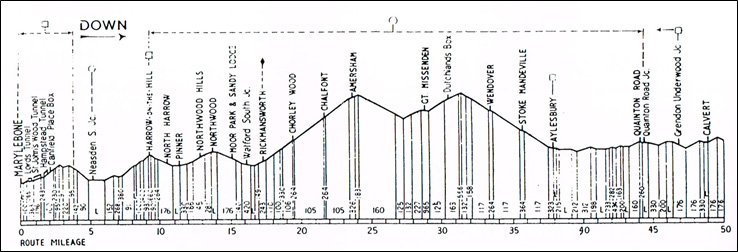
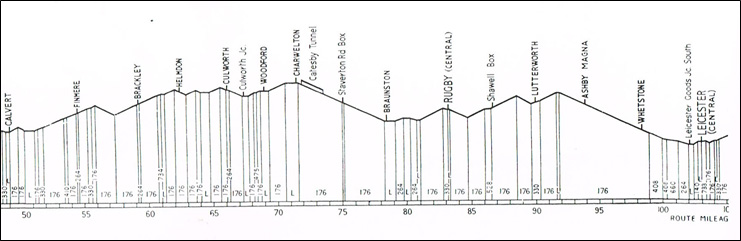
From 1936, B17s with larger LNER tenders (providing increased coal and water capacity) were delivered to Leicester and Neasden. The route—the London Extension—was engineered for higher speeds and a continental loading gauge. Combined with the skilled crews of the GC section, the B17s became synonymous with reliability on express passenger and newspaper trains. These "Footballers," with their polished brass nameplates and club colors, became favorites among the traveling public and enthusiasts alike.
2. The "East Anglian" Streamliners
Introduced in September 1937, the East Anglian express provided high-speed service between London and Norwich. Two locomotives, Nos. 2859 East Anglian and 2870 City of London, were selected and converted to a streamlined version resembling the A4 Pacifics.
Allocated to Norwich Thorpe, these were the first engines with larger tenders to work the GE section. Though side skirting was removed in 1941 to ease wartime maintenance, they remained in service until being converted back to their original outline in 1951.
5. Performance Records
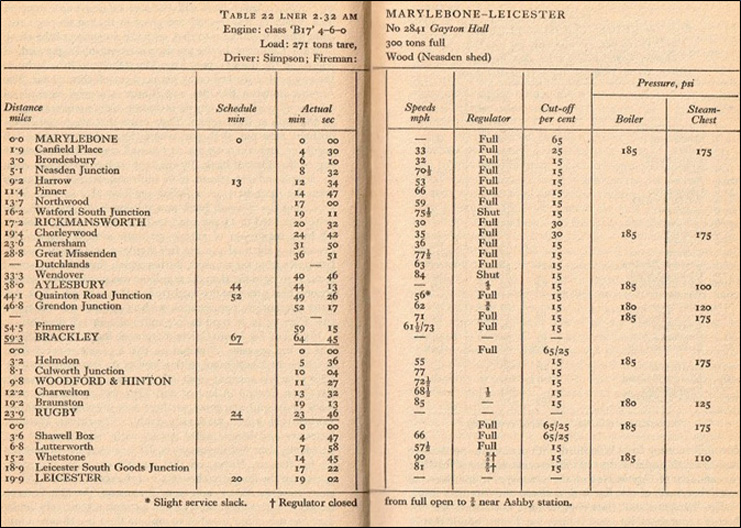
The 'Down' Newspaper Express (Marylebone to Leicester, c. 1936)
O.S. Nock recorded a 1936 trip on 2841 Gayton Hall as his most exciting B17 run. Starting from Marylebone at 2:32 am, the engine passed Neasden at over 70 mph and touched 84 mph at Wendover. In a magnificent finale, the engine accelerated from 75 to 90 mph on the descent to Leicester.
Timing Logs Archive
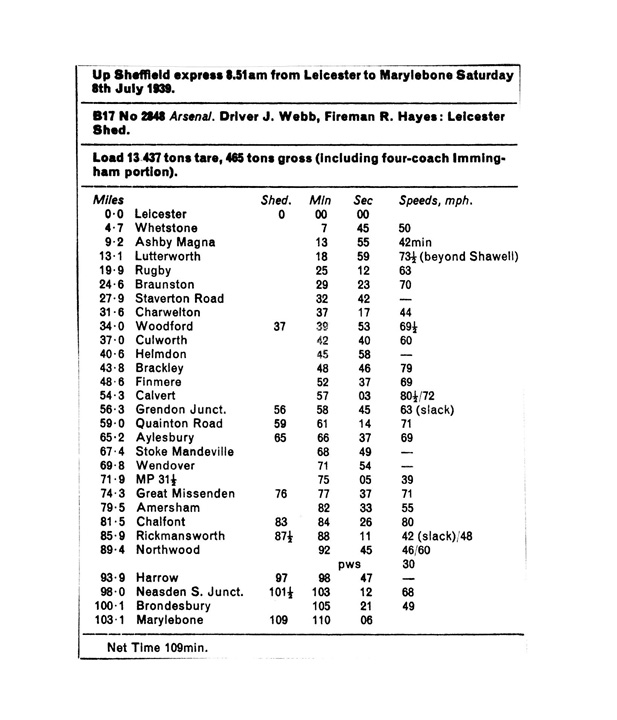
- Log 2: 08:51 Leicester to Marylebone (2848 Arsenal, 13 coaches).
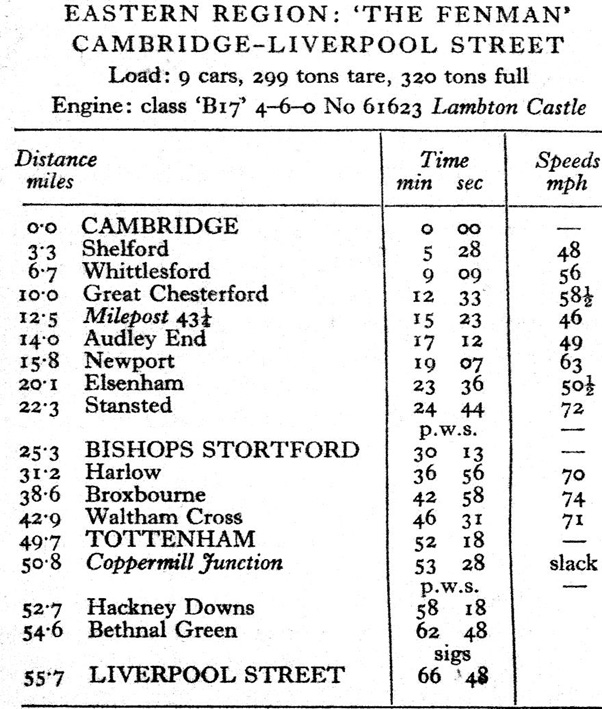
- Log 3: "The Fenman" Cambridge to Liverpool Street (61623 Lambton Castle, 9 coaches).
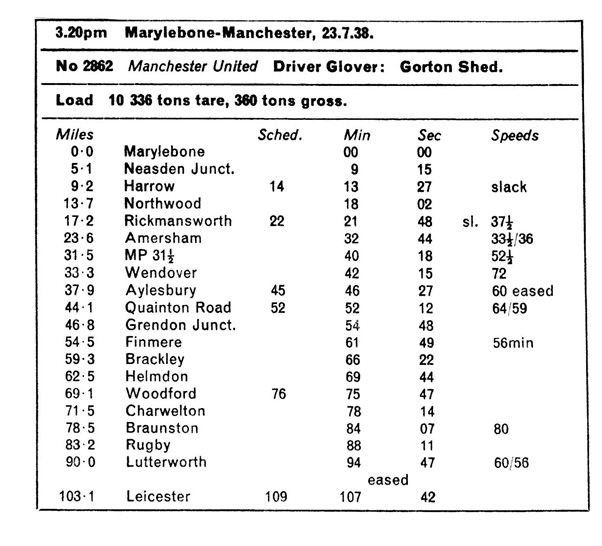
- Log 4: 15:20 Marylebone to Manchester (2862 Manchester United, 10 coaches).
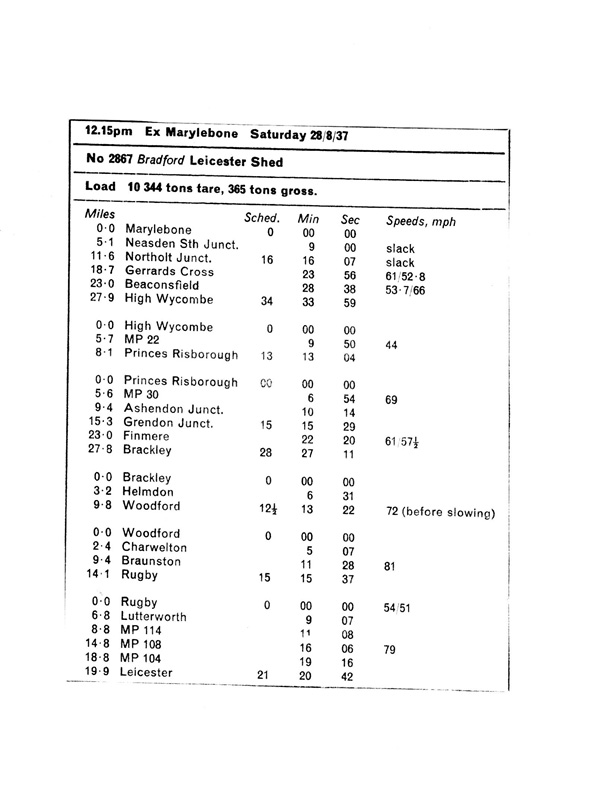
- Log 5: 12:15 Marylebone to Leicester (2867 Bradford, 10 coaches).
7. Accidents and Incidents
Investigations into most accidents show they could have been prevented, yet they remain a sober part of railway history.
- Needham Market (1928): First of class No. 2800 Sandringham fouled a platform edge on its maiden run; coping stones were subsequently moved back.
- Wrabness (1929): 2804 Elveden ran through unsecure trap points while working the Flushing Continental, just one month after delivery.
- Tottenham North Junction (1929): 2808 Gunton struck a freight train in thick fog due to the freight driver’s error. Gunton went on to be the longest survivor of the class.
- Sleaford North Junction (1937): 2829 Naworth Castle derailed at double the speed restriction, destroying a platelayers' hut and causing fatalities.
- Harold Wood (1941): 2828 Harewood House stalled with a heavy train and was struck from behind; seven lives were lost.
- Gidea Park (1947): 1602 Walsingham overran signals in a rear-end collision; seven fatalities and 45 hospitalized.
Further References
Key academic and historical sources for B17 performance and service history:
- Harvey, D.W.: Bill Harvey's 60 Years of Steam (1986).
- Jackson & Russell: 'North Country Continental' 1927-39, Railway World (1978).
- Nock, O.S.: LNER Steam (1969).
- Robson, T.: The counter pressure brake method of testing locomotives, J. Instn Loco. Engrs (1943).