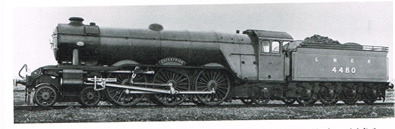
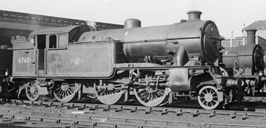
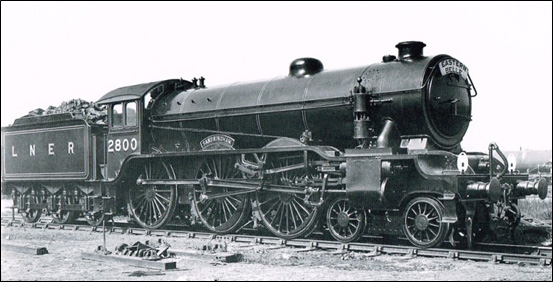
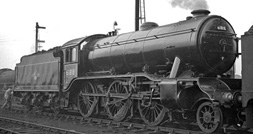
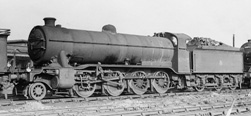
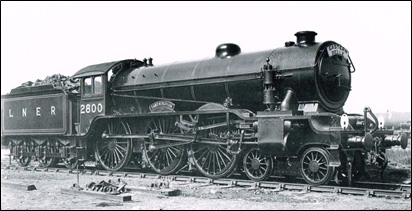
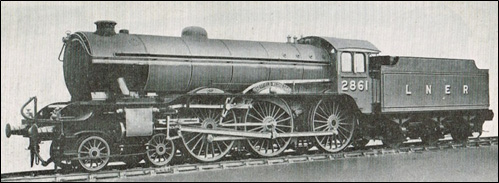
The Sandringham class locomotive is an easily recognisable design, boasting distinguishing features that uniquely identify it within the LNER family. To understand its identity, we must look at how the B17 design evolved through aesthetic influences and internal engineering requirements.
The Design Requirement
By the mid-1920s, power requirements for the former Great Eastern Railway (GER) district were critical. Express passenger services had reached weights of up to 430 tons, creating a shortage of suitable motive power. Due to strict loading gauge limitations, locomotives from other LNER regions could not simply be transferred in.
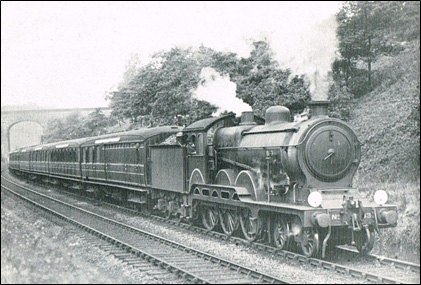
Introduced: 1911 | Designer: S.D. Holden
Boiler: 180 psi | 2 Inside Cylinders
Driving Wheels: 6ft 6in
Following the General Strike of 1926, poor coal quality led to failing performances on the Cambridge and Southend lines. LNER management ordered Sir Nigel Gresley to produce a new 4-6-0 design to supplement the B12s for heavy passenger work.
The Specification
The initial brief called for a three-cylinder 4-6-0, borrowing the motion arrangement and 6’ 8” driving wheels from the D49 class, with a tractive effort of roughly 25,000lb and an axle load limit of 17 tons. After the Doncaster design office struggled to meet these constraints, the contract was handed to the North British Locomotive Co. (NBL) in December 1927.
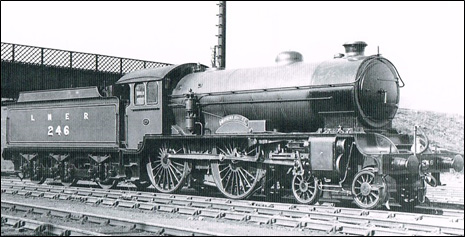
Introduced: 1927 | Designer: H.N. Gresley
Boiler: 180 psi | 3 Cylinders
Driving Wheels: 6ft 8in
Borrowing from the "Family"
The final B17 design was an exercise in successful "parentage," utilizing proven features from across the LNER locomotive family to expedite production:
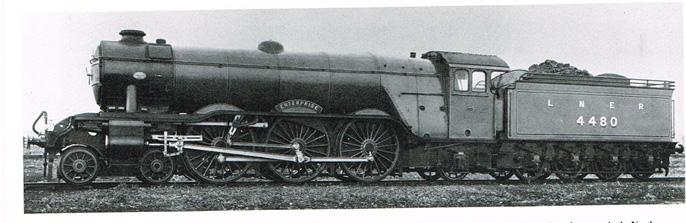
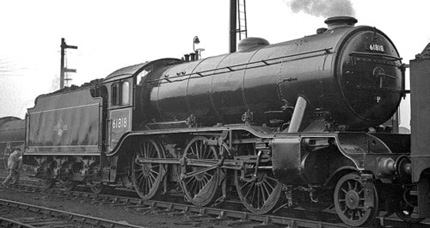
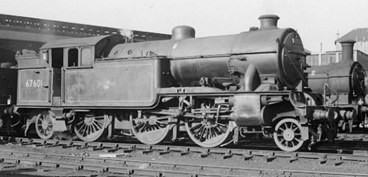
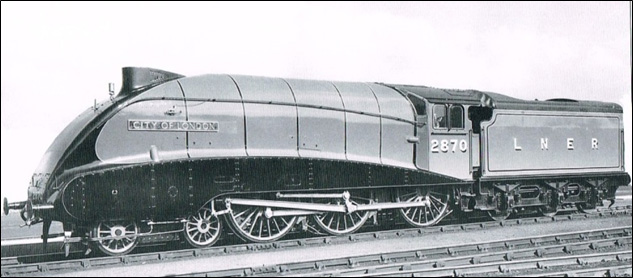
Additionally, Darlington Works provided bogie drawings, while Stratford Works designed the specific GE-type 3,700-gallon tenders required for the region's short turntables.
The "Invisible" Peculiarity
The most unique internal feature was the divided drive. Because it was physically impossible for all three cylinders to drive the middle coupled axle, the middle cylinder was positioned forward above the front bogie to power the leading axle.
Summary: B17 Parentage
Aesthetically, the B17 is the perfect montage of LNER engineering. It inherited the best features of its parental designs, proving that commonality of parts could result in a magnificent and efficient machine.